If you are writing for an American audience, you may wonder whether cozy or cosy is the correct spelling.
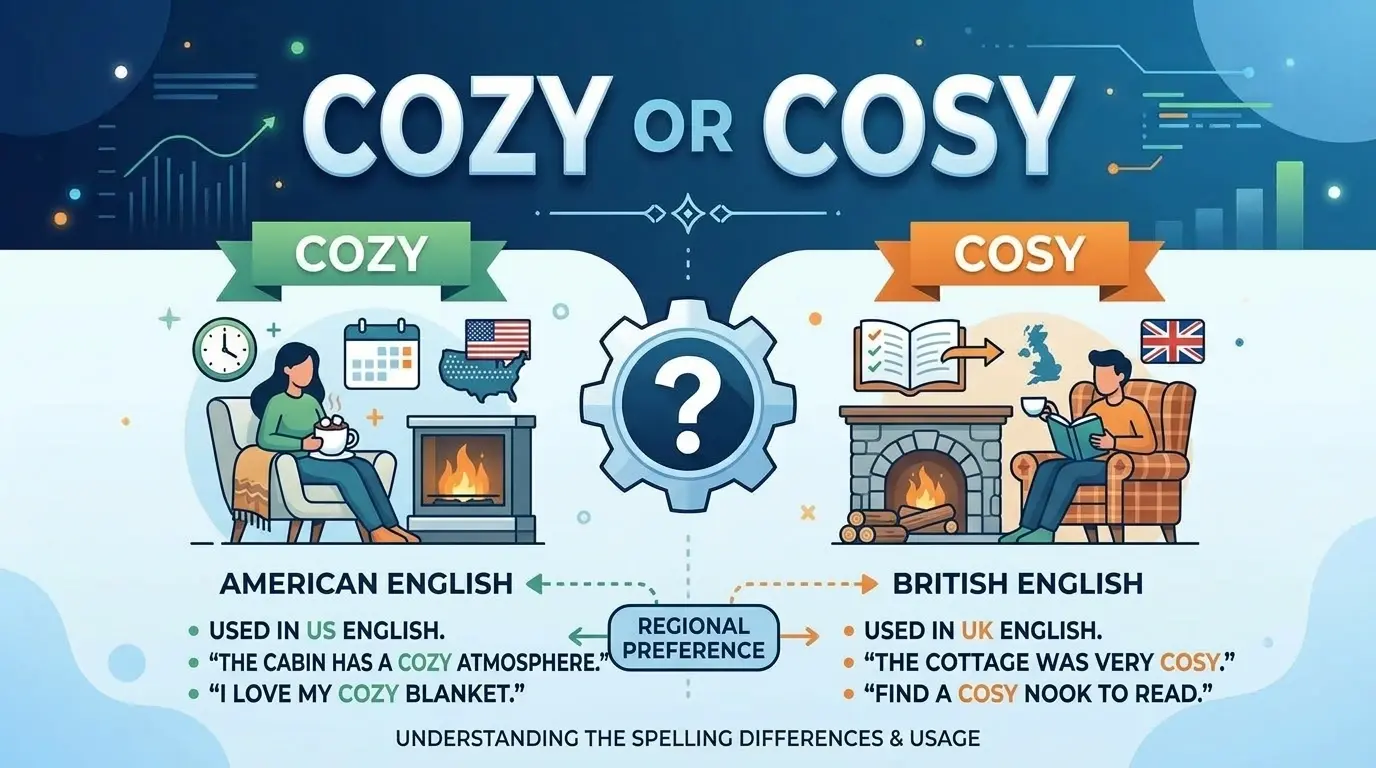
The answer depends on the type of English you are using. Cozy is the standard spelling in American English, while cosy is the standard British English spelling. Both words have the same meaning: comfortable, warm, and pleasant.
You might see cosy in a British book, website, or message and wonder if it is a spelling mistake. It is not. English has many words that use different spellings in American and British English, and cozy/cosy is one of them.
Knowing which form to use can help you keep your writing consistent. If you are writing for readers in the United States, cozy is usually the right choice. For British English, use cosy.
Cozy or Cosy: Quick Answer
Cozy is the standard American English spelling, while cosy is the standard British English spelling. Both words have the same meaning: comfortable, warm, pleasant, and inviting. The difference is only the spelling. Cambridge lists cozy as the US spelling and cosy as the UK spelling.
Quick Rule
Use cozy in American English and cosy in British English; both spellings have the same meaning.
What Does Cozy or Cosy Mean?
Cozy and cosy describe something comfortable, warm, pleasant, and inviting. The words are especially common for rooms, homes, places, clothing, and situations that create a comfortable feeling.
For example:
We sat in a cozy room beside the fireplace.
In British English, the same sentence would usually use:
We sat in a cosy room beside the fireplace.
The meaning does not change.
Only the spelling changes.
The word can describe a physical place:
- a cozy room
- a cozy house
- a cozy apartment
- a cozy chair
- a cozy blanket
It can also describe a pleasant atmosphere or situation:
- a cozy evening
- a cozy atmosphere
- a cozy little café
- a cozy family gathering
Cambridge defines the word as comfortable and pleasant, especially when a place is small and warm.
Read More: Saw or Seen? The Correct Form ExplainedCozy vs Cosy: What Is the Difference?
Cozy and cosy are the same word with two regional spellings. Cozy is used in American English, while cosy is used in British English. You should choose the spelling that matches the variety of English you are writing.
| Spelling | English variety | Meaning |
| cozy | American English | Comfortable, warm, pleasant |
| cosy | British English | Comfortable, warm, pleasant |
This is similar to other spelling differences between American and British English.
For example:
- color → American English
- colour → British English
But unlike words with different meanings, cozy and cosy do not have different definitions.
They describe the same idea.
American English
The cabin was small but cozy.
British English
The cottage was small but cosy.
Both sentences mean that the place was comfortable and pleasant.
When to Use Cozy
Use “cozy” when writing in American English. It is the standard US spelling of the word and is common in everyday American writing. Cambridge identifies cozy as the American spelling of British cosy.
If your audience is mainly in the United States, cozy is usually the natural choice.
Examples
- We found a cozy little restaurant.
- The hotel has a cozy lobby.
- She created a cozy reading corner.
- This blanket feels warm and cozy.
- The apartment has a cozy atmosphere.
- We spent a cozy evening at home.
- The cabin looked small but cozy.
- I love this cozy sweater.
- The fireplace makes the room feel cozy.
- They decorated the house with a cozy style.
For a US-focused website, product description, school assignment, or professional document, cozy is generally the spelling you want.
When to Use Cosy
Use “cosy” when writing in British English. It is the standard British spelling of the same word. Cambridge identifies cosy as the UK spelling of cozy.
The spelling is common in British English and can also appear in other varieties that follow British spelling conventions.
Examples
- We found a cosy little restaurant.
- The hotel has a cosy lounge.
- She created a cosy reading corner.
- This blanket feels warm and cosy.
- The cottage has a cosy atmosphere.
- We spent a cosy evening at home.
- The cabin looked small but cosy.
- I love this cosy sweater.
- The fireplace makes the room feel cosy.
- They decorated the house in a cosy style.
The meaning remains exactly the same.
Only the spelling changes from z to s.
Cozy vs Cosy in American and British English
American English uses “cozy,” while British English uses “cosy.” This difference follows a broader pattern where some American spellings use z where British spellings use s.
Here is the simple comparison:
| American English | British English |
| cozy | cosy |
| cozier | cosier |
| coziest | cosiest |
| coziness | cosiness |
The same regional pattern continues when the word changes form.
Comparative form
American:
This room is cozier than the other one.
British:
This room is cosier than the other one.
Superlative form
American:
This is the coziest room in the house.
British:
This is the cosiest room in the house.
Noun form
American:
I love the coziness of this cabin.
British:
I love the cosiness of this cottage.
Cambridge lists coziness as the US spelling and cosiness as the UK form.
Why Does American English Use “Cozy”?
The difference is part of the wider spelling history between American and British English. American English often uses z in words where British English uses s, including forms such as cozy/cosy.
The important point for everyday writing is not the history.
You simply need to know which spelling matches your audience.
For a US audience:
cozy
For a UK audience:
cosy
You do not need to change the meaning or pronunciation.
Cozy and Cosy Example Sentences
Here are natural examples showing how the two spellings work.
American English: Cozy
- The room felt cozy after we lit the fireplace.
- We stayed in a cozy cabin for the weekend.
- She bought a cozy blanket for winter.
- The café has a warm and cozy atmosphere.
- I love reading in my cozy chair.
- They created a cozy space for guests.
- The little house looked cozy from the outside.
- We had a cozy dinner at home.
- The hotel room was small but cozy.
- Her sweater looked soft and cozy.
British English: Cosy
- The room felt cosy after we lit the fire.
- We stayed in a cosy cottage for the weekend.
- She bought a cosy blanket for winter.
- The café has a warm and cosy atmosphere.
- I love reading in my cosy chair.
- They created a cosy space for guests.
- The little house looked cosy from the outside.
- We had a cosy dinner at home.
- The hotel room was small but cosy.
- Her jumper looked soft and cosy.
These examples show that the difference is spelling rather than meaning.
Is “Cozy” or “Cosy” More Correct?
Neither spelling is universally more correct. The appropriate form depends on the variety of English you are using. Cozy is standard in American English, while cosy is standard in British English.
If you are writing for Americans, choose:
cozy
If you are writing for British readers, choose:
cosy
Both forms are standard.
The key is consistency.
For example, if an American article uses color, favorite, and cozy, that spelling style is consistent.
A British article may use colour, favourite, and cosy.
Mixing spelling systems is not always grammatically wrong, but consistent regional spelling usually makes your writing cleaner.
Common Mistakes With Cozy and Cosy
The most common mistake is treating one spelling as wrong everywhere. Both forms are correct, but each belongs to a different standard variety of English.
Mistake 1: Thinking “cosy” is misspelled
❌ Cosy is always wrong.
That is not correct.
Cosy is the standard British spelling.
Mistake 2: Thinking “cozy” is wrong in American English
❌ Cozy is a British spelling mistake.
That is also incorrect.
Cozy is the standard American spelling.
Mistake 3: Mixing regional spellings
For example:
The room was cosy, and the color was beautiful.
This mixes British cosy with American color.
It is better to choose one regional style for the document and keep it consistent.
Mistake 4: Changing the meaning
Cozy and cosy do not normally have different meanings.
The spelling changes.
The basic meaning stays the same.
Is “Cozy” Used Only for Rooms?
No. Although cozy is often used for rooms, homes, and other spaces, it can describe many things that feel comfortable, warm, pleasant, or inviting.
You can describe:
Places
We stayed in a cozy cabin.
Clothing
This sweater is warm and cozy.
Furniture
The chair is soft and cozy.
Atmospheres
The restaurant has a cozy atmosphere.
Experiences
We had a cozy evening by the fire.
Relationships or situations
The word can also describe a close or comfortable relationship.
However, cozy can sometimes have a negative sense when describing an arrangement that seems too close or convenient.
Cambridge includes this additional sense, describing a situation that is convenient for the people involved and may not be honest or proper.
Cozy or Cosy in “Cozy Mystery”
Cozy mystery is the standard American spelling, while cosy mystery is used in British English. The term describes a type of mystery or crime story that is generally less graphic and often set in a pleasant environment.
For example:
American English:
She enjoys reading cozy mysteries.
British English:
She enjoys reading cosy mysteries.
The spelling follows the same regional rule.
What About “Coziness” and “Cosiness”?
Coziness is the American spelling, while cosiness is the British spelling. Both nouns describe the quality or feeling of being comfortable, pleasant, and warm.
American English
I love the coziness of this cabin.
British English
I love the cosiness of this cottage.
The pattern is easy to remember:
US: cozy → coziness
UK: cosy → cosiness
What About “Cozy” vs “Cosy” in Formal Writing?
Both forms are acceptable in formal writing when they match the chosen variety of English. The important point is to use the spelling appropriate for your audience and keep your regional spelling consistent.
For an American audience, use:
cozy
For a British audience, use:
cosy
The same principle applies to other regional spelling differences.
If you are writing for an American school, company, website, or publication, cozy is generally the natural choice.
Memory Trick
The easiest way to remember the difference is:
Z = American English
S = British English
So:
cozy → American
cosy → British
You can connect cozy with other American spellings that often use z.
Just remember that this is a spelling convention, not a different meaning.
FAQs
1.Is “cozy” or “cosy” correct?
Both are correct. Cozy is the standard American English spelling, while cosy is the standard British English spelling.
2.Is “cozy” American or British?
Cozy is the American English spelling. British English generally uses cosy.
3.Is “cosy” British or American?
Cosy is the British English spelling. American English uses cozy.
4.Does cozy and cosy mean the same thing?
Yes. They have the same basic meaning. Both describe something comfortable, pleasant, warm, or inviting.
5.Which spelling should I use in the United States?
Use cozy for American English. It is the standard US spelling.
6.Which spelling should I use in the UK?
Use cosy for British English. It is the standard UK spelling.
7.Is “cozier” or “cosier” correct?
Both are correct depending on the regional variety. Cozier is American English, while cosier is British English.
8.Is it “coziest” or “cosiest”?
Both forms are correct. Use coziest in American English and cosiest in British English.
9.Is “coziness” or “cosiness” correct?
Both are correct. Coziness is the American spelling, while cosiness is the British spelling.
10.Is cozy a formal word?
Yes. Cozy is a standard English word and can be used in both casual and formal writing when its meaning fits the context.
Conclusion:
Cozy and cosy are both correct spellings of the same word. The main difference is regional: cozy is standard American English, while cosy is standard British English.
Both describe something comfortable, warm, pleasant, or inviting.
If you are writing for a US audience, choose cozy. If you are following British English, choose cosy.
The easiest rule is simple: Z for American English, S for British English.

As an American English writer, I specialize in creating clear and engaging content that makes grammar and language learning accessible to everyone. I enjoy breaking down complex English concepts into simple, practical lessons that readers can apply with confidence. My mission is to help learners strengthen their communication skills through easy and reliable content.











1 thought on “Cozy or Cosy? The Correct Spelling in American and British English”