Is Each Singular or Plural? The Correct Grammar Rule Explained

Each is usually singular when it is the subject, so it takes a singular verb such as “is” or “has.” ...
Read more
Move Past or Passed? The Correct Phrase Explained
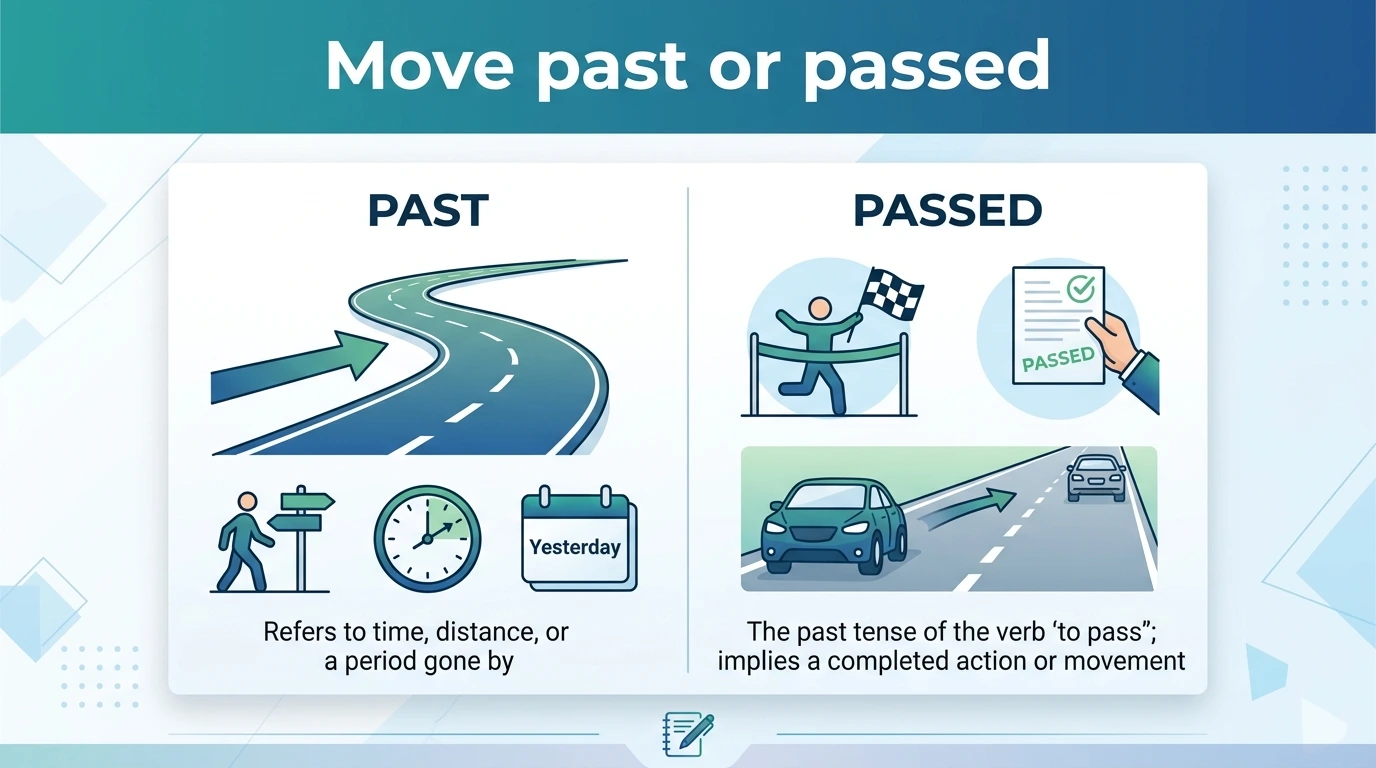
Move past is the correct phrase when you mean going beyond something or getting beyond a difficult situation. Move passed ...
Read more
In or On: What’s the Difference? Simple Rules and Examples
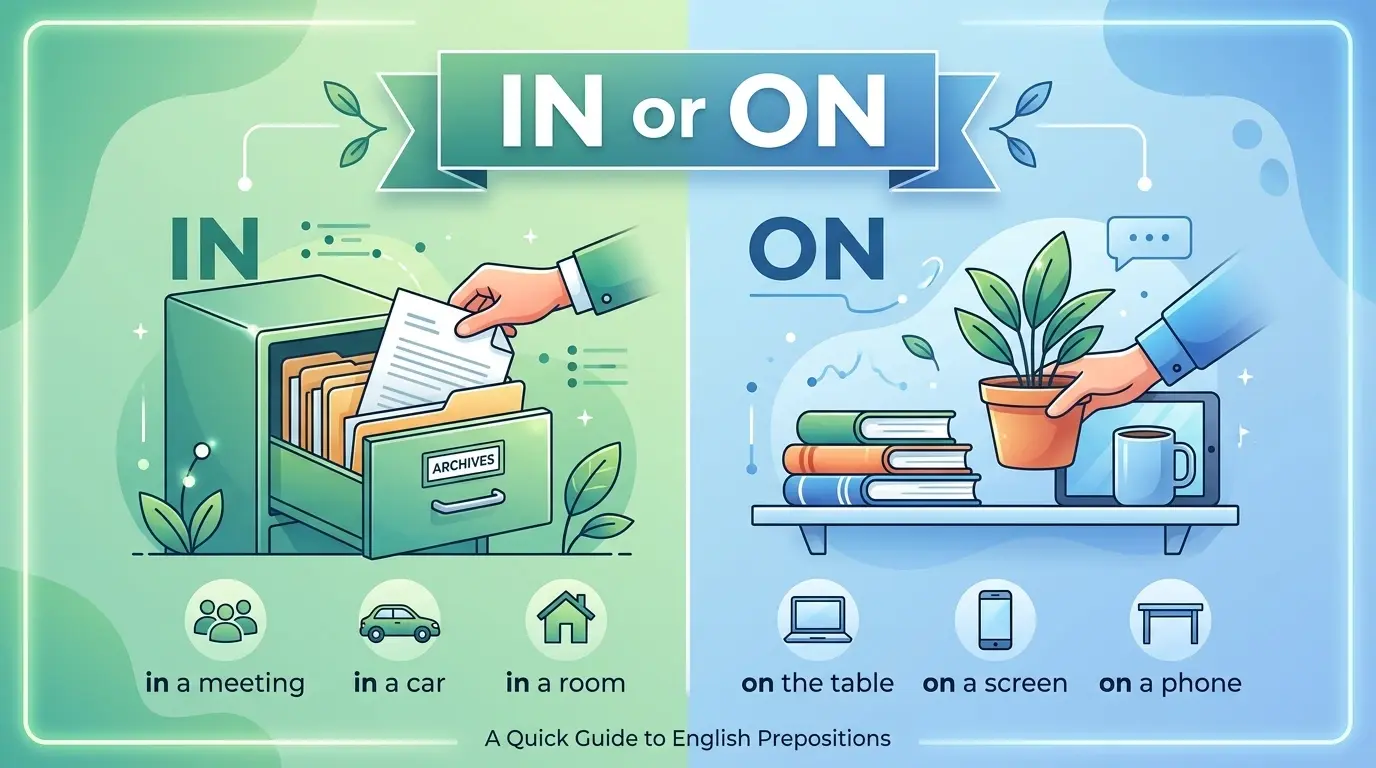
Use “in” for something inside an area or period, and use “on” for a surface, specific day, or connected position. ...
Read more
By Accident or On Accident? Which Is Correct?
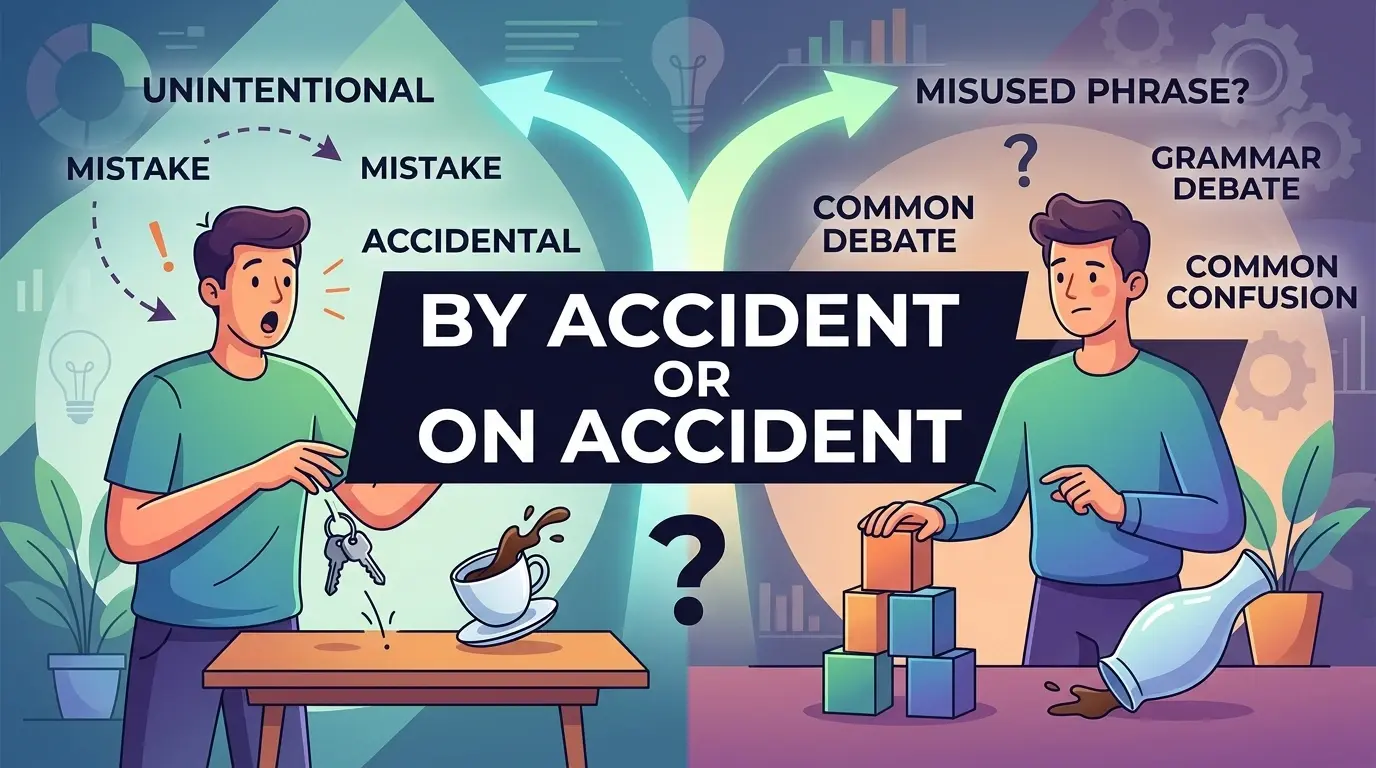
By accident is the traditional and widely accepted phrase, while on accident is also used, especially in American English. Both ...
Read more
Afterward or Afterwards? Which One Is Correct?

Afterward and afterwards are both correct, but afterward is more common in American English, while afterwards is especially common in ...
Read more
Cannot vs Can Not vs. Can’t: What’s the Difference?
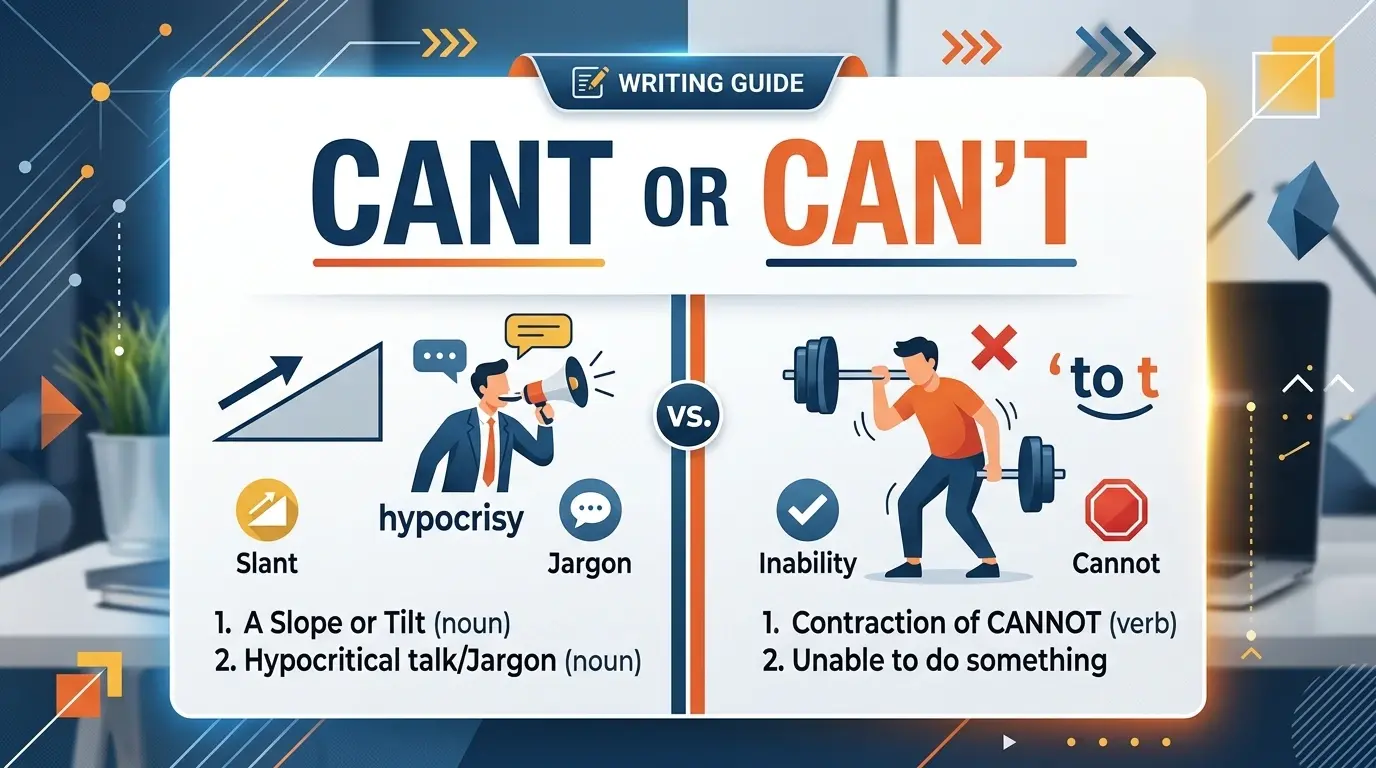
If you are writing an email, school assignment, or professional document, you may pause over one small question: cannot, can ...
Read more
Along Side or Alongside? Correct Spelling, Meaning & Examples
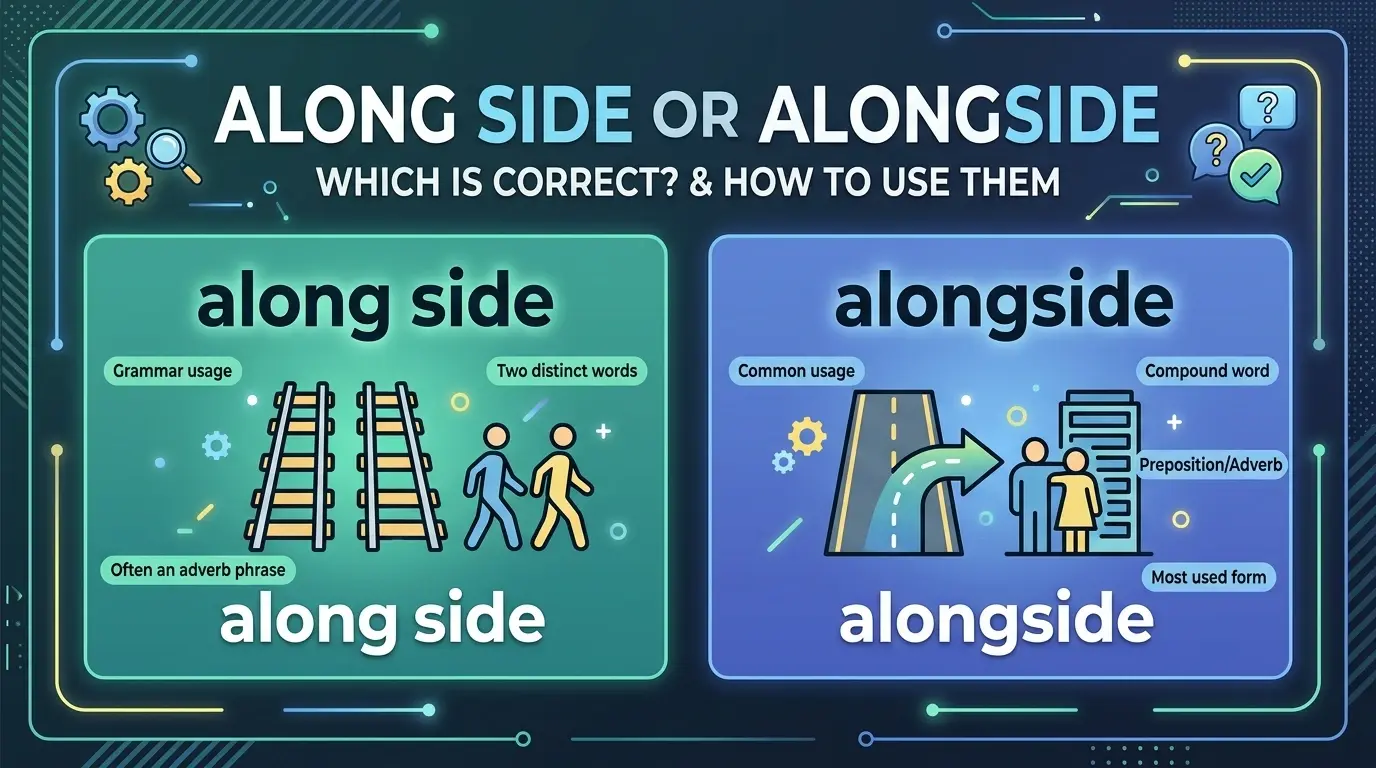
Alongside is the correct standard spelling when you mean “next to,” “beside,” or “together with.” Along side is usually incorrect ...
Read more
Goodluck or Good Luck? Correct Spelling, Meaning & Examples

Good luck is the correct spelling, while goodluck is not the standard form. If you are writing a message, email, ...
Read more
Neighbor or Neighbour? Correct Spelling, Meaning & Examples
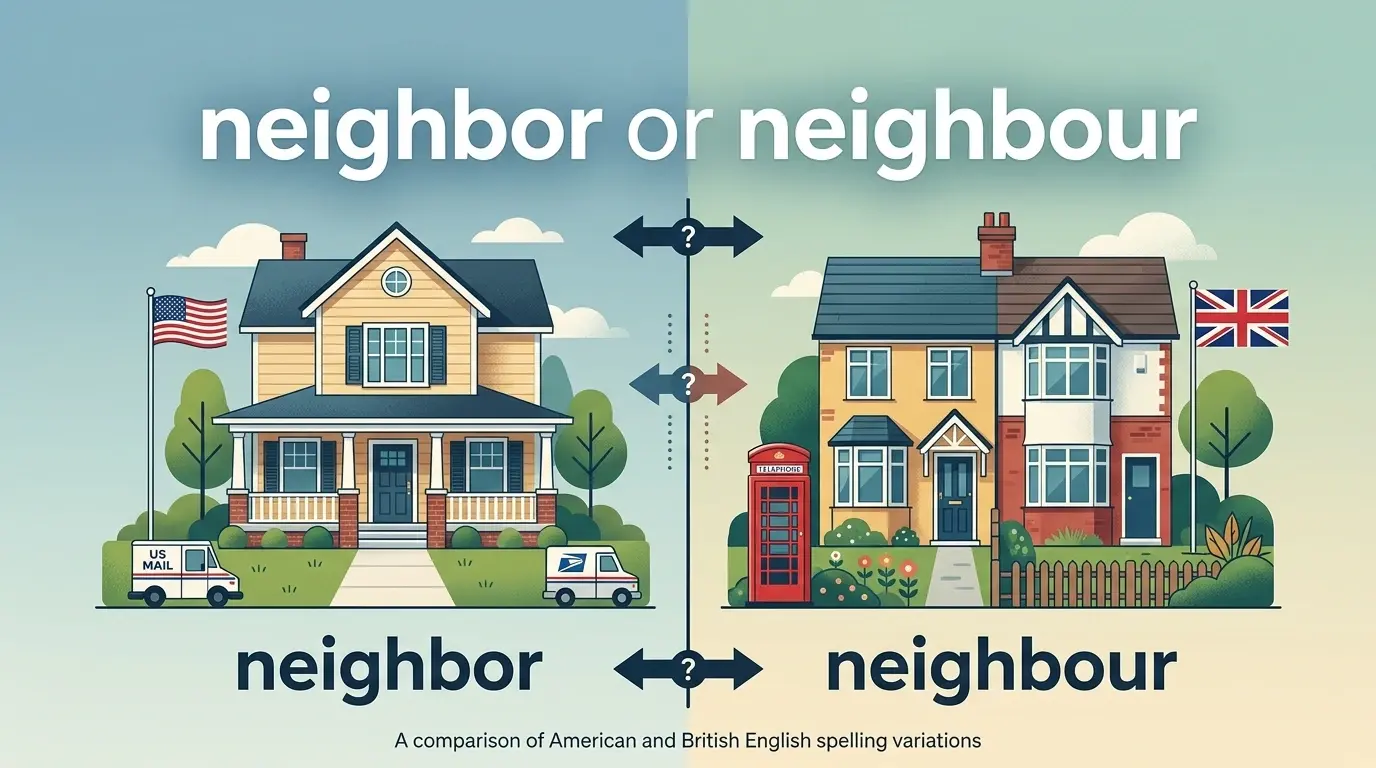
Neighbor is the correct American English spelling, while neighbour is the British English spelling. Both spellings are correct, depending on ...
Read more
Is It Greatful or Grateful? Correct Spelling, Meaning & Examples
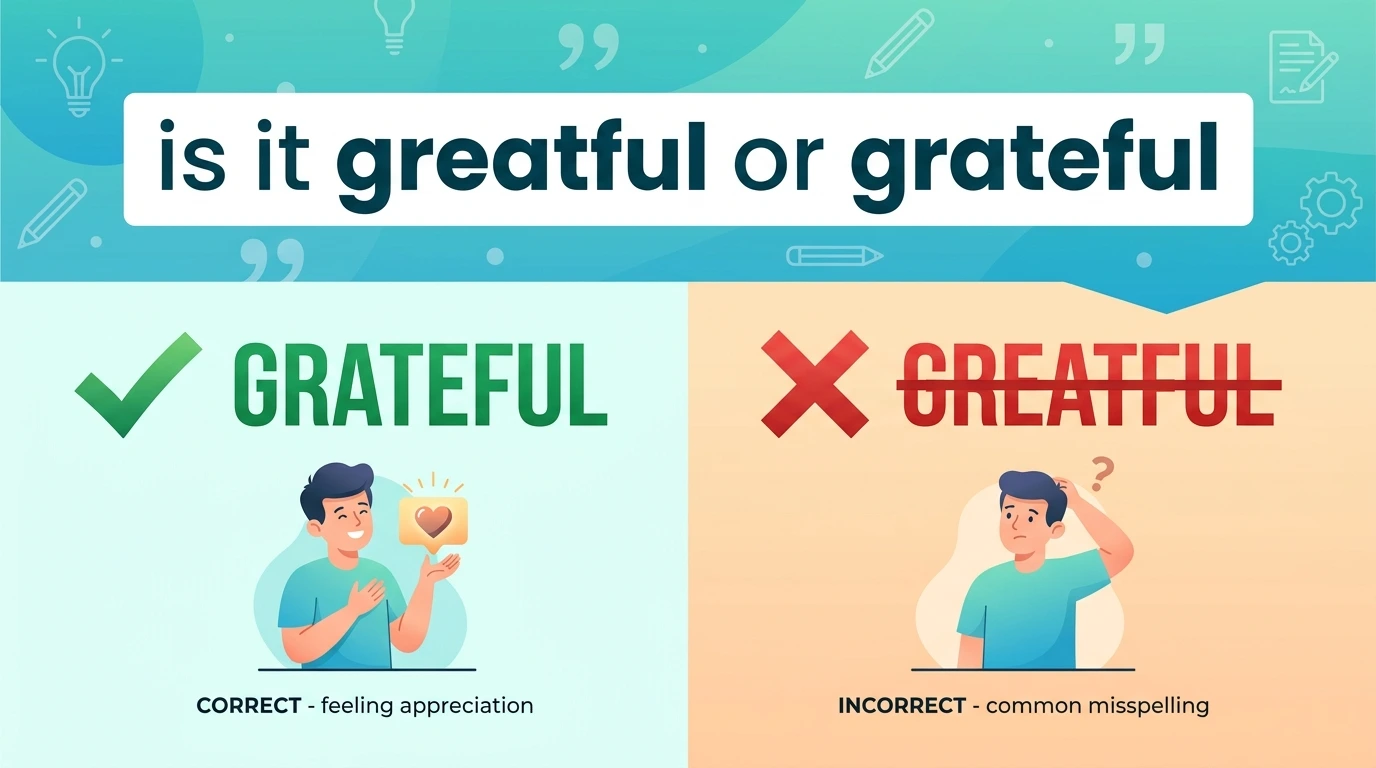
Grateful is the correct spelling when you mean thankful or appreciative. Greatful is a common misspelling and is not the ...
Read more